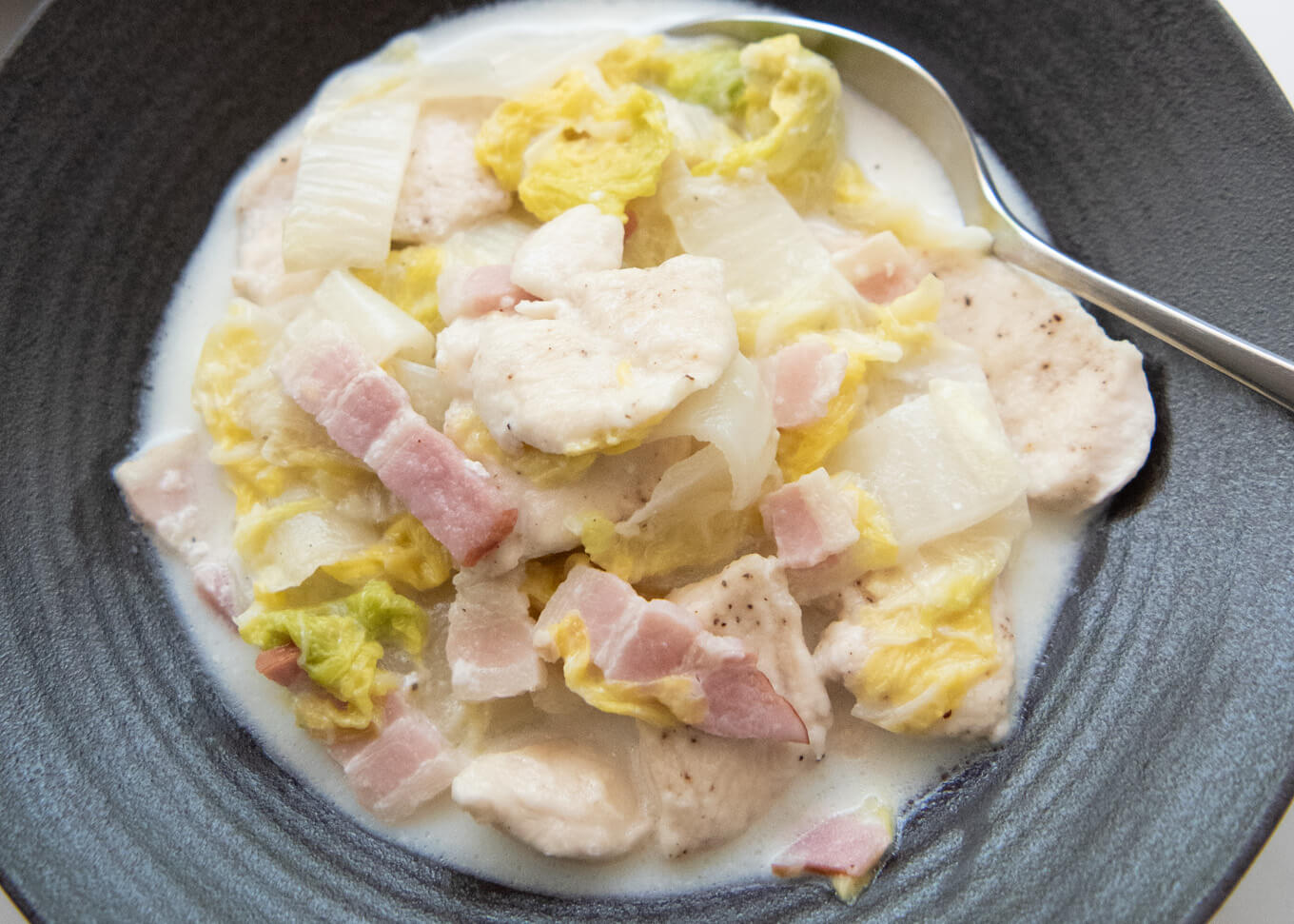
Chicken and Cabbage Simmered in Milk is a comforting dish made with juicy, tender chicken breast, Chinese cabbage, and bacon cooked in milk. It looks almost like a stew, but I wouldn’t call it a stew because the ingredients are not slow cooked for a long time, and the broth is not thick either. It’s close to a soup.
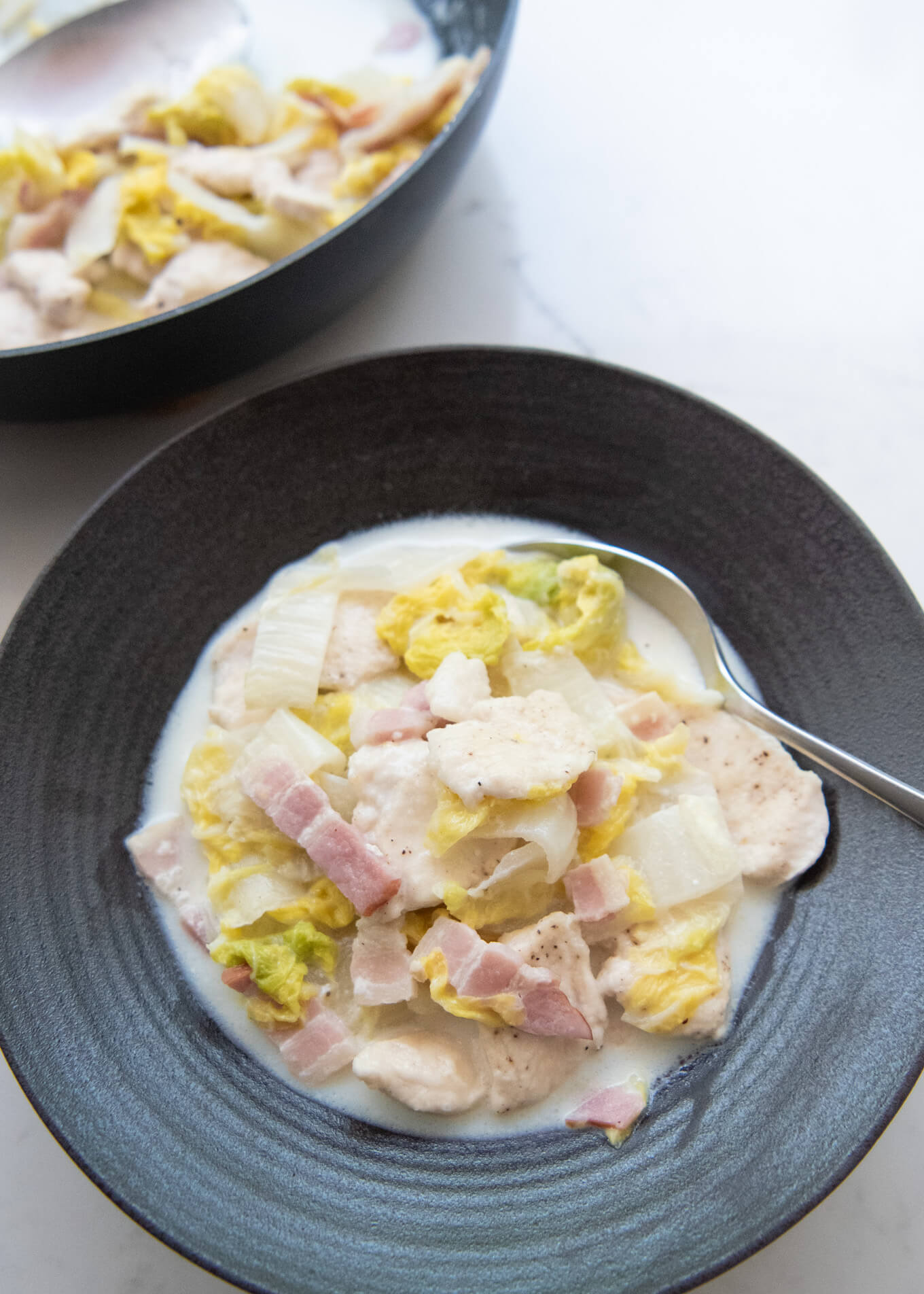
I used the recipe from the Japanese recipe called 鶏胸肉と白菜のミルク煮. Because it was so tasty, I didn’t alter anything except that I adjusted the quantity of seasoning to be more specific and provided more detailed instructions.
Chicken breast tends to become dry when cooked, but in this recipe the chicken pieces stay quite moist. Coating the chicken with flour and lightly searing the surface before simmering make all the difference.
The flavour of the milk broth comes from the butter and the main ingredients, without using dashi stock or stock cubes. But it is surprisingly tasty.
What’s in My Chicken and Cabbage Simmered in Milk
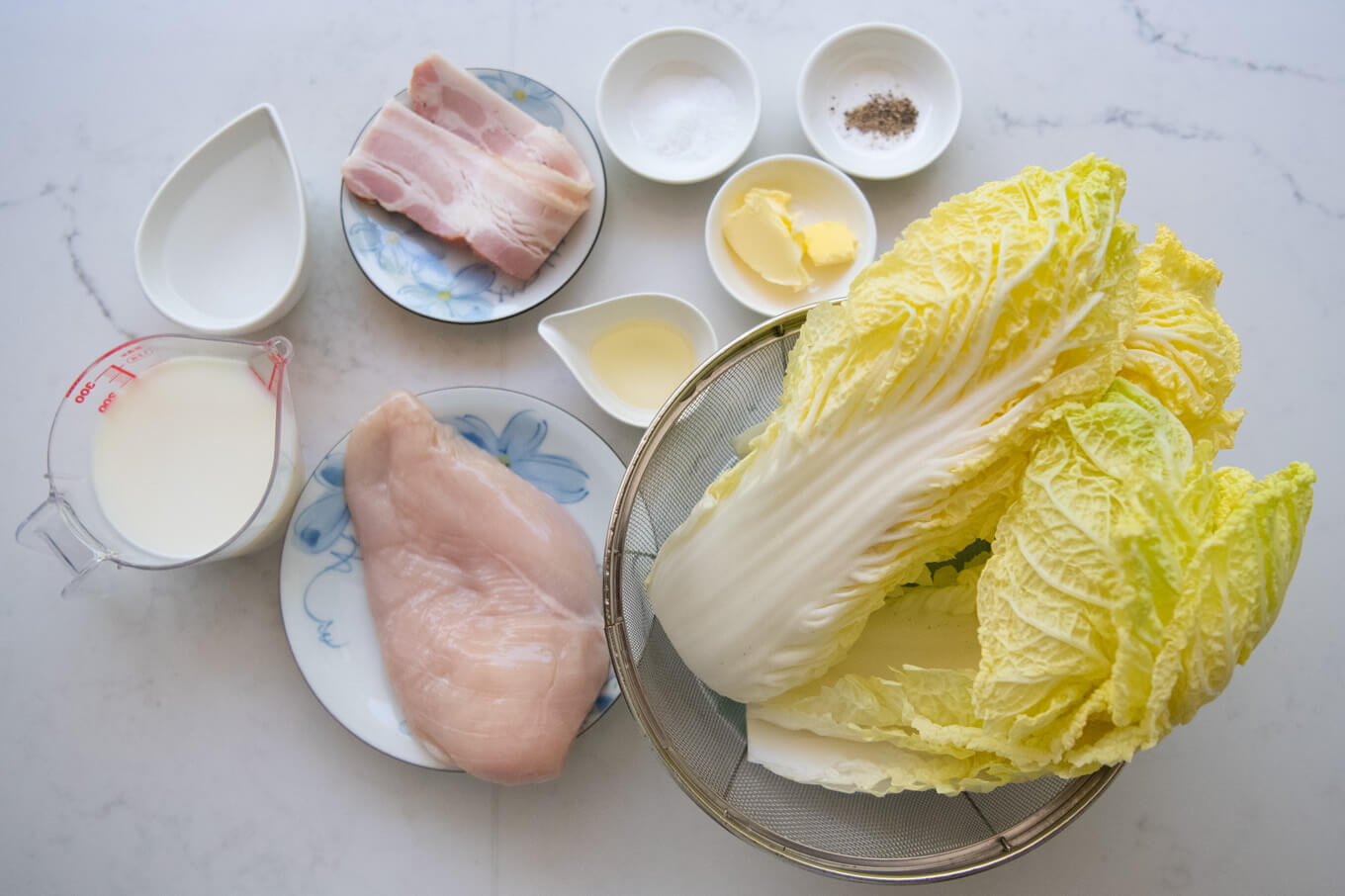
- Chicken breast, sliced to 5mm(3/16″)-thick bite-size pieces
- Chinese cabbage cut into 2cm(¾”)-wide pieces
- Bacon cut into 1cm-wide strips
- Salt and pepper
- Flour
- Oil
- Butter
- Water
- Milk.
I used sogi-giri method to slice the chicken breast. Cut the breast lengthwise first, then slice each strip into thin bite-size pieces.
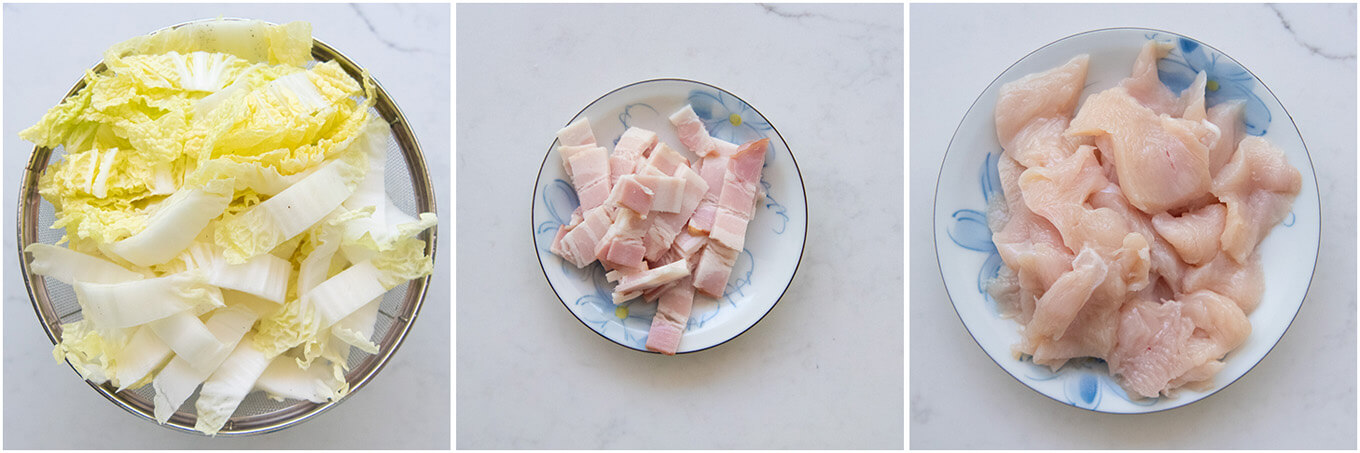
From left to right: Chinese cabbage, bacon, chicken.
You can use cabbage instead of Chinese cabbage, although the texture will not be as tender. You will also need to increase the water slightly since you need to cook the cabbage longer.
How to make Chicken and Cabbage Simmered in Milk
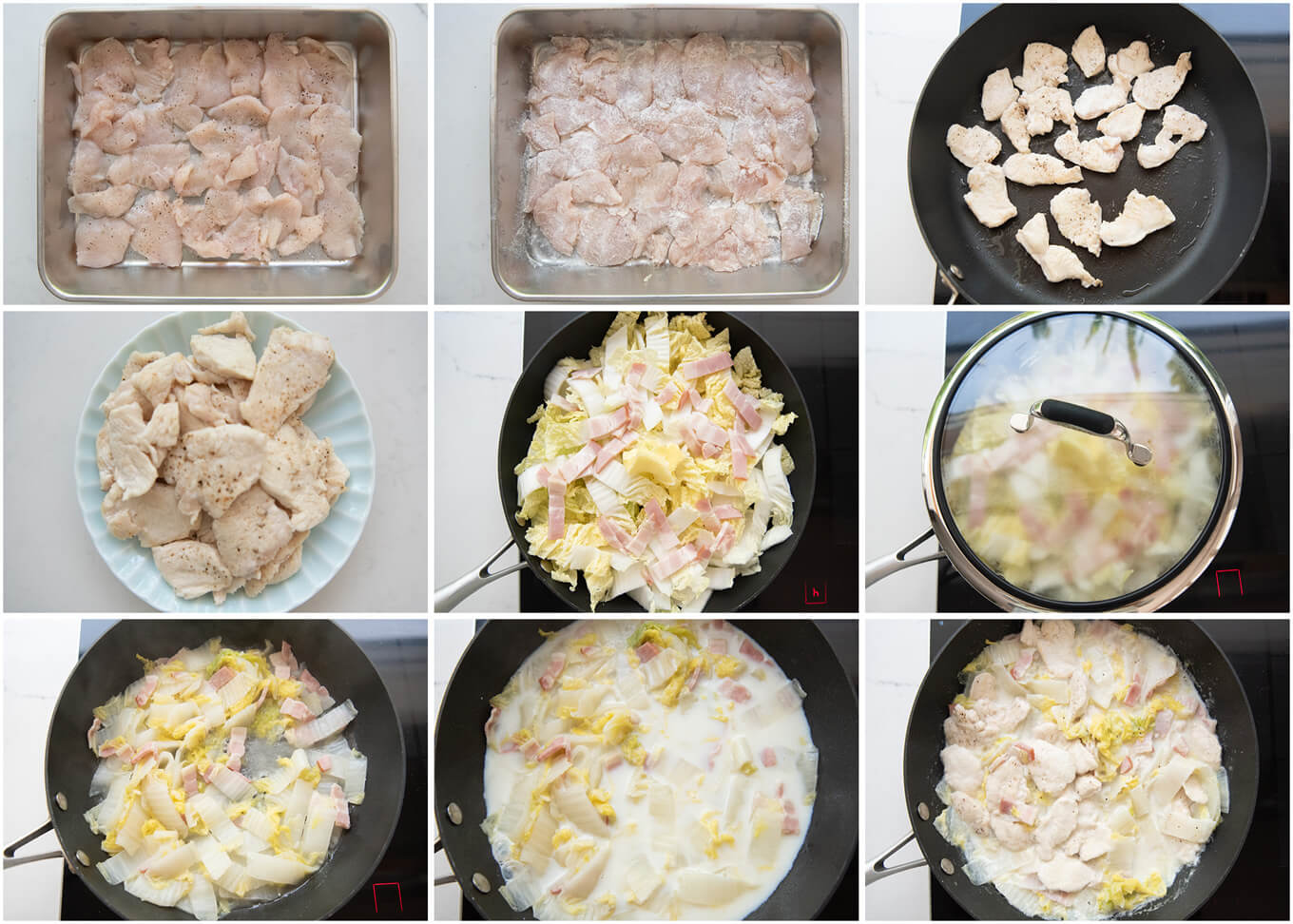
- Season the chicken pieces and dust them with flour.
- Heat oil in a frying pan over medium heat. Add the chicken pieces and sear the surface of the chicken. Transfer the chicken to a plate and turn the heat off.
- Spread the Chinese cabbage in the same frying pan, scatter the bacon pieces over it, and place the butter on top. Add the water and put a lid on. Bring it to the boil.
- Reduce the heat to medium and cook for about 8-10 minutes, mixing the ingredients after about 4 minutes of cooking.
- Remove the lid and add milk to the pan. When the broth starts boiling again, add the chicken to the pan, and cook further 1 minute, gently mixing the chicken pieces into the broth.
- Taste test and adjust with salt and pepper if required, then turn the heat off.
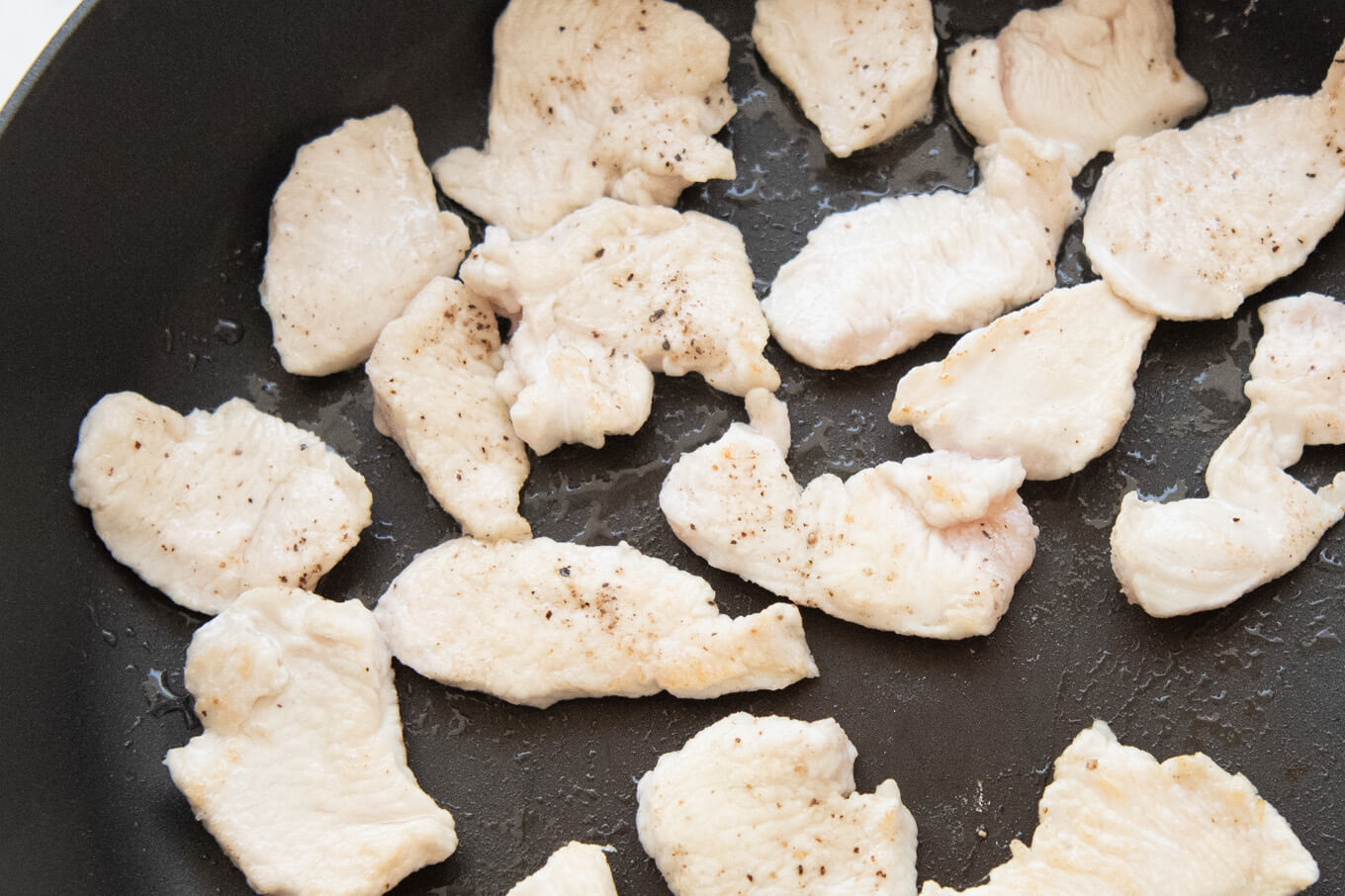
You want to keep the broth as white as possible. For this reason, you don’t want to brown the chicken when searing. All you need to do is turn the surface of the chicken white – it is fine if the inside is still raw at this stage.
After adding milk, do not let the broth boil vigorously to prevent it from curdling.
Chicken and Cabbage Simmered in Milk does not require long, slow cooking like a stew. You need about 20 minutes to make it, including preparations.
Stew is often considered a winter dish, but you can eat Chicken and Cabbage Simmered in Milk in warm weather too, perhaps because of the lightness of the broth. The aroma of bacon and butter gives it a light yet satisfying flavour.
Yumiko
Chicken and Cabbage Simmered in Milk is a comforting dish with juicy, tender chicken breast, Chinese cabbage, and bacon cooked in milk. It looks almost like a stew, but the ingredients are not slow-cooked for a long time, and the consistency of the milk-flavoured broth is not thick.
Don't forget to see the section 'MEAL IDEAS' below the recipe card! It gives you a list of dishes that I have already posted and this recipe that can make up a complete meal. I hope it is of help to you.
- 250g/8.9oz chicken breast (note 1)
- 250g/8.9oz Chinese cabbage (also called napa cabbage, note 2)
- 50g/1.8oz bacon (note 3)
- ¼ tsp salt
- 2 pinches pepper
- 1½ tbsp flour
- 1½ tbsp oil
- 10g/0.4oz butter
- 50ml/1.7fl oz water (note 4)
- 150ml/5.1fl oz milk
- Salt and pepper to season
-
Halve the chicken breast lengthwise, then slice each piece, perpendicular to the first cut, into 5mm(3/16")-thick bite-size pieces (note 5).
-
Cut the Chinese cabbage perpendicular to the fibre direction into 2cm(¾")-wide pieces.
-
Cut bacon into 1cm-wide strips.
-
Season chicken pieces with ¼ teaspoon salt and 2 pinches of pepper, then dust them with flour.
-
Heat oil in a frying pan over medium heat. Add the chicken pieces and cook for about 30 seconds or as soon as the bottom of the chicken pieces becomes white, then turn it over. Cook the other side of the chicken pieces in the same way.
-
Turn the heat off and transfer the chicken to a plate. It’s OK even if the chicken is not fully cooked through.
-
Fill the used frying pan with Chinese cabbage pieces. Scatter the bacon over them and place the butter on top.
-
Add water, place a lid on, and bring it to a boil. Reduce the heat to medium and cook for about 8 minutes (note 6), mixing the ingredients halfway through. The white part of the cabbage pieces should soften.
-
Remove the lid. If you have too much liquid left in the pan, continue cooking without the lid until only a thin layer of water remains (see the Step-by-step photo in the post).
-
Add the milk and continue cooking. When the milk broth starts to boil, return the chicken pieces to the pan and cook for a minute or so to cook them through.
-
Turn the heat off.
1. My chicken breast weighed 257g/9.1oz. Even if your chicken is slightly over or under, it doesn’t matter.
2. If Chinese cabbage is out of season, you can substitute it with regular cabbage.
3. I used streaky bacon (from belly, with layers of fat and meat), but you can also use short cut bacon (from the back, wider and leaner). If you are using short cut bacon, halve the wide part of the bacon lengthwise to shorten the strips.
4. If you are using regular cabbage instead of Chinese cabbage, you will need slightly more water because cabbage contains less water and requires a little more cooking.
5. I used sogi-giri method to slice the chicken, which keeps the size of the slices consistent. It also makes the cooked chicken tender because of the way the fibres are cut. If the width of the halved chicken breast is too wide, you can slice it half lengthwise to make narrower pieces.
6. After 8 minutes, there should still be some water left in the pan. But if water is runs out, add some more. If you are using regular cabbage, you will need to cook it longer.
7. It keeps 3-4 days in the fridge.
8. Nutrition per serving.
serving: 398g calories: 498kcal fat: 35g (54%) saturated fat: 9.7g (48%) trans fat: 0.4g polyunsaturated fat: 13g monounsaturated fat: 10g cholesterol: 97mg (32%) sodium: 816mg (34%) carbohydrates: 14g (5%) dietary fibre: 2g (9%) sugar: 6g protein: 33g vitamin D: 2mcg (10%) calcium: 213mg (21%) iron: 2.2mg (12%) potassium: 731mg (16%)
Meal Ideas
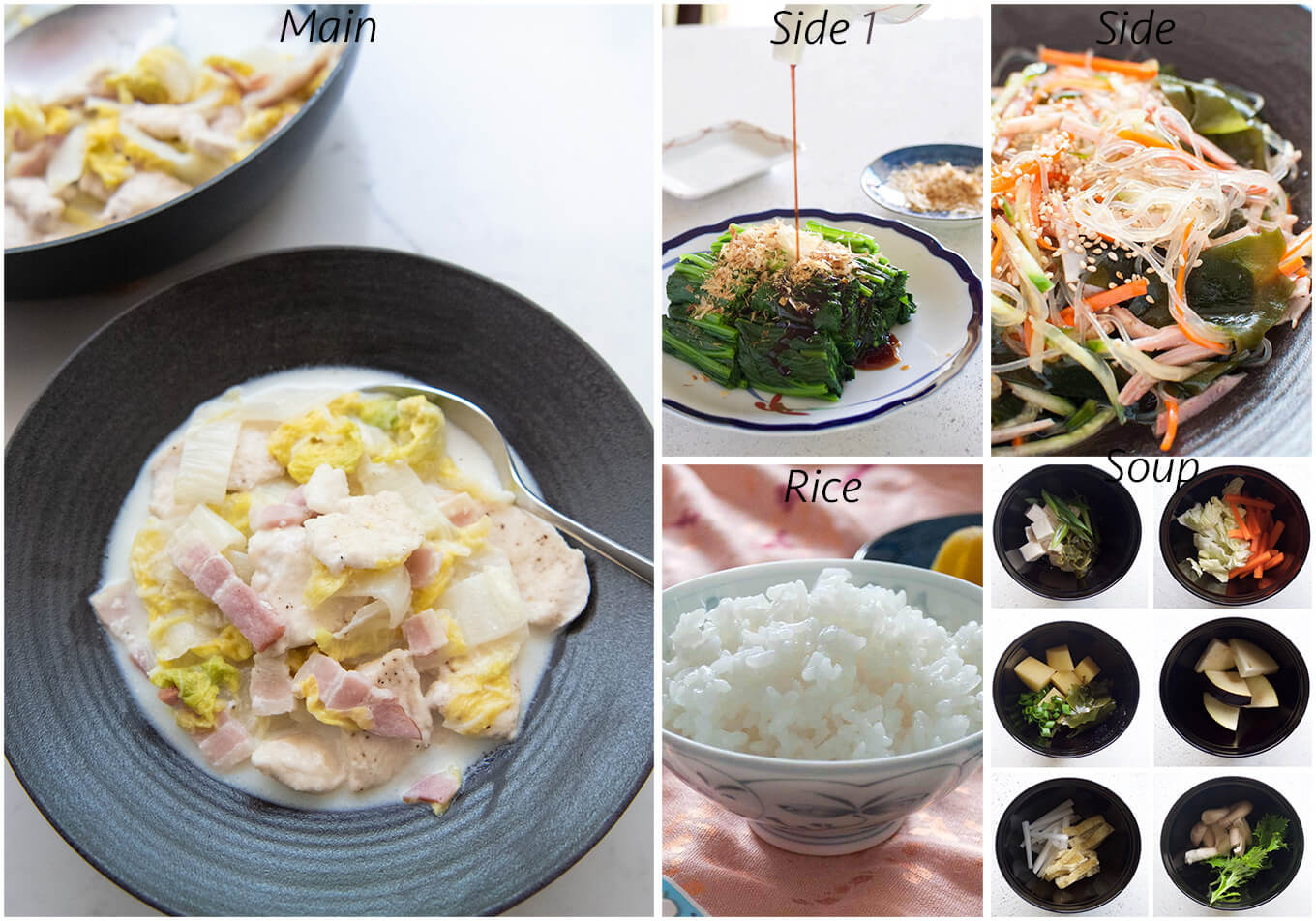
A typical Japanese meal consists of a main dish, a couple of side dishes, a soup and rice. I try to come up with a combination of dishes with a variety of flavours, colours, textures and make-ahead dishes.
To counter the milky flavour of the main dish, I picked a rather simple side dish – Spinach Ohitashi Salad. Salted Daikon Salad is also good.
For Side dish 2, I chose Harusame Salad to add a vinegary flavour, which is quite different from other dishes. The seaweed in this salad also supplements dietary fibre, which is lacking in the main dish.
- Main: Chicken and Cabbage Simmered in Milk – today’s recipe, you can make ahead.
- Side dish 1: Spinach Ohitashi Salad – or Salted Daikon Salad (Shio Momi Daikon).
- Side dish 2: Japanese Vermicelli Salad (Harusame Salad) – or other salad with vinegar dressing.
- Soup: Miso Soup of your choice from Miso Soup Ingredient Combinations or your favourite ingredients.
- Rice: Cooked Rice.
Yumiko – It is 10pm in the Southern Highlands and I wish I was making this now . . . simple and warm and satisfying the way you have described it. Something which, after a long day, would not take long and would one feel very healthy to boot before going to bed . . . thank you . .
Hi Eha, haha.
It can get chilly in the. night time down there.
Oops. So sorry. I didn’t register that the recipe was by Yumiko, not Nagi.
I would still like the measurements explained, thank you.
Cheers Alex
Hi Alex, no worries.
Majority of tablespoons sold at the shops in Australia are 15ml these days. Both Nagi and I think it’s best to use 15ml spoon since our readers spread worldwide.
Hi Nagi
I love everything you do and have used many, many of your recipes with great success.
In Australia a tablespoon measures 20ml. Why do you say 15ml which is used in UK and US?
Your cup measure is the Australian 250ml.
I’m just a bit confused. When I know it’s a UK/US recipe I always measure 15ml.
Cheers Alex