Quick and easy Shiso Pesto Pasta is a perfect dish for a weeknight dinner. I decided to post this recipe at the same time as my Shiso Pesto recipe, because pesto on its own doesn’t really feed you unless you use it with something substantial.
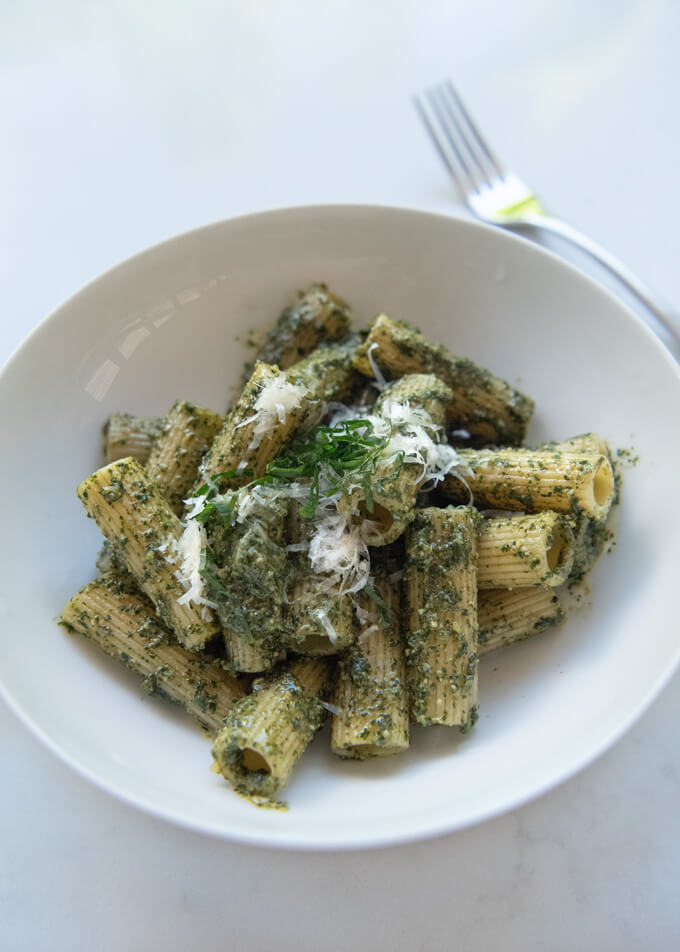
Today’s dish takes no time to make. Once the pasta is cooked, it takes only a minute or two to toss it in the Shiso Pesto. However, there are a few extra considerations to make a great Shiso Pesto Pasta.
Pasta suitable for Pesto (in my view)
In theory, any type of pasta can be used, but I think short pasta (not tiny pasta like risoni/orzo) works better than long pasta such as spaghetti. Shapes with spirals like fusilli, or tube-style pasta such as rigatoni and penne are ideal. The grooved and tubular structures are designed to trap sauces such as pesto and ragù.
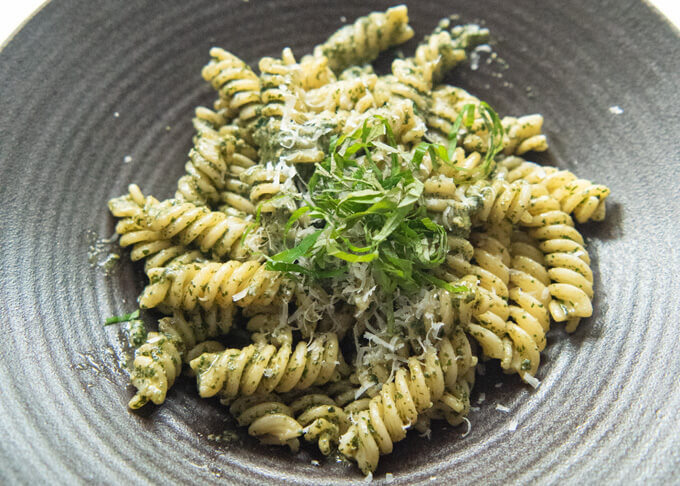
Shiso Pesto Pasta made with fusilli.
Another bonus is that short pastas are easier to eat!
Add the pasta cooking water
Like any pasta tossed in a thick sauce, you should reserve some pasta cooking water before draining. Pesto is quite thick, so adding a small amount of pasta cooking water helps loosen the sauce, allowing it to coat the pasta thoroughly. It also gives the sauce a glossy finish.
What’s in my Shiso Pesto Pasta (Japanese Perilla Pesto Pasta)
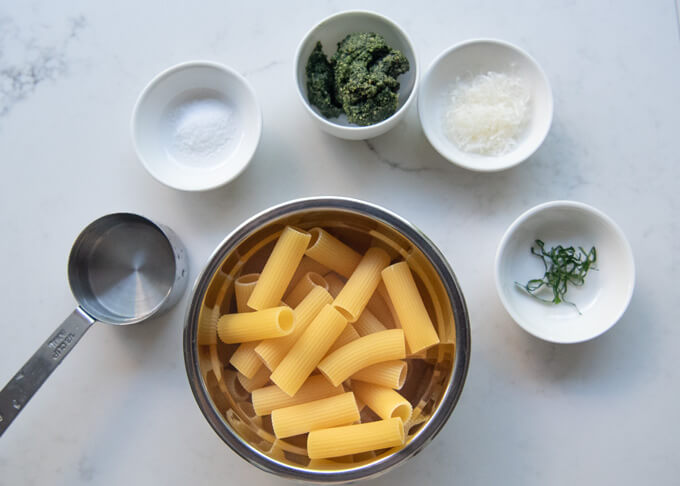
- Japanese Perilla Pesto
- Short pasta of your choice, e.g. fusilli, rigatoni, penne
- Salt
- Pasta cooking water.
I tried both rigatoni and fusilli. If you only have long pasta, such as spaghetti, you can of course use it instead.
Make sure to reserve the pasta cooking water just before draining the pasta.
Serving
- Freshly grated parmesan
- Shredded shiso leaves (optional).
How to Make Shiso Pesto Pasta (Japanese Perilla Pesto Pasta)
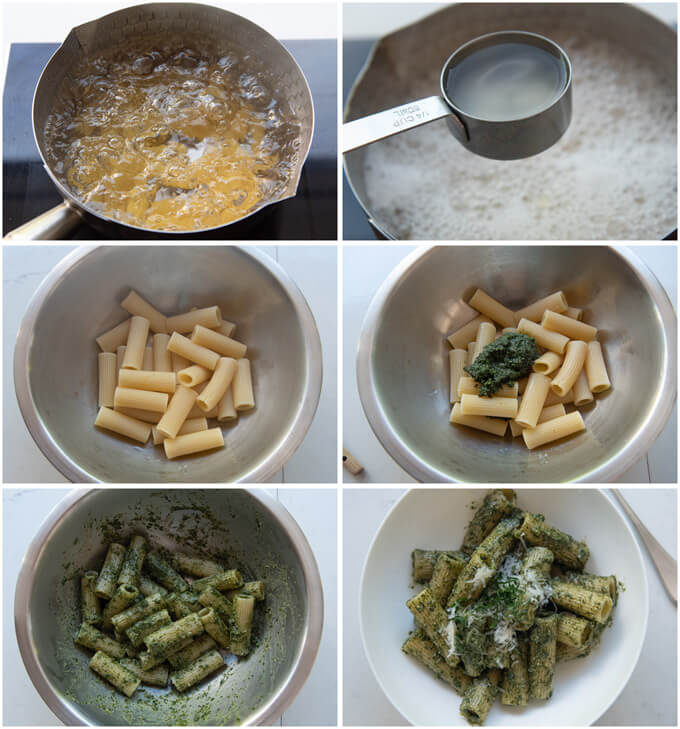
- Cook pasta according to the packet instructions.
- Reserve pasta cooking water, then drain the pasta.
- Transfer the pasta to a bowl.
- Add the Shiso Pesto and 1 tablespoon of pasta cooking water.
- Mix well. Add more pasta cooking water if required and mix again.
- Serve immediately, garnish with parmesan and shredded shiso, if using.
It is important not to use the pasta cooking pot as it is hot, and the pasta will overcook.
The amount of pasta cooking water you need will depend on the thickness of the pesto and how moist your pasta is. After mixing the sauce and pasta cooking water with your pasta, the sauce should become a soft paste. It should not be watery or puddle at the bottom of your bowl. You should not see liquid in the bowl at all.
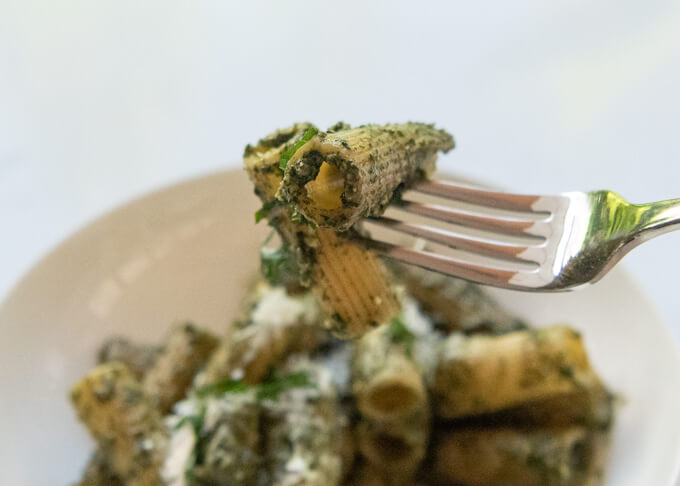
Shiso Pesto Pasta gives you a quick and easy pesto pasta with a slightly different flavour. It can be a main dish or a side to your main dish.
Yumiko
Quick and easy, Shiso Pesto Pasta is a perfect dish for a weeknight dinner. It gives you a slightly different flavour from the classic pesto pasta. It can be a main dish or a side.
Cooking time does not include the time to make Shiso Pesto, but it includes pasta cooking time (approx. 12 minutes).
- 100g / 3.5oz short pasta (e.g. rigatoni, note 1)
- 2½ tbsp Shiso Pesto
- ¼ cup pasta cooking water (note 2)
- Salt as needed
- 1 tbsp freshly grated parmesan
- Shredded shiso leaves (optional)
-
Cook pasta as per the instructions on the back of the packet.
-
Reserve ¼ cup of pasta cooking water, then drain.
-
Transfer the pasta to a bowl (note 3), add shiso pesto and a tablespoon of pasta cooking water.
-
Quickly mix ensuring the pesto coats the pasta evenly. The pesto should become creamy because of the pasta cooking water.
-
If necessary, add more pasta cooking water (note 4), and mix well.
-
Transfer the pasta to a serving bowl, topped with parmesan and shiso, if using.
-
Serve immediately.
1. I used rigatoni in this recipe, but you can use other short pasta such as penne and fusilli. Short pasta coats pesto better than long pasta. But if you only have long pasta, e.g. spaghetti, you can of course use it instead.
2. Reserve the pasta cooking water just before draining the pasta. The quantity you reserve will be more than you actually need.
The starch in the water acts as a natural emulsifier, binding oil and sauce to the pasta for a smooth, creamy texture.
3. Transferring the pasta to a new bowl is important. Never use the pot that you used to cook the pasta as the heat of the pot will overcook it.
4. Be careful not to add too much pasta cooking water. The sauce should not become watery or pool at the bottom - it should be soft and creamy.
Meal Ideas
A typical Japanese meal consists of a main dish, a couple of side dishes, a soup and rice. I try to come up with a combination of dishes with a variety of flavours, colours, textures and make-ahead dishes.
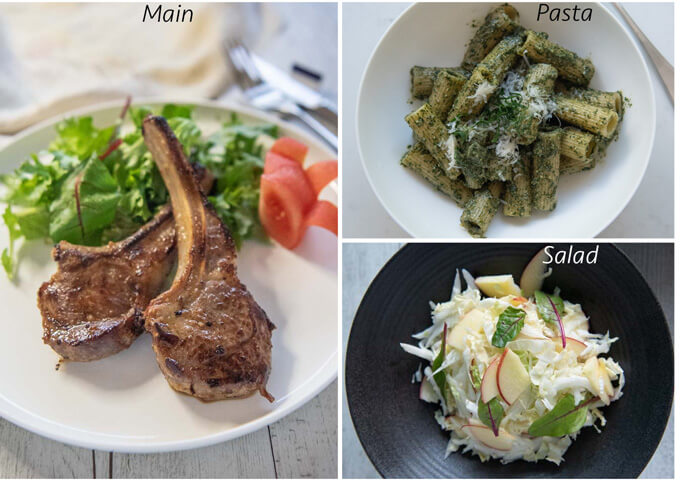
Since Pasta is today’s dish, I picked dishes to make a Western-style meal set. Pan-fried Lamb Chops and Chinese Cabbage with Apple Salad go well with S. But actually, you can have any meat or fish dish with some salad.
- Main: Pan-fried Lamb Chops with Miso Marinade – or other meat/fish main dish.
- Pasta: Shiso Pesto Pasta (Japanese Perilla Pasta) – today’s recipe.
- Salad: Chinese Cabbage and Apple Salad– or other simple salad.
Leave a Reply