Hi Karen,
Each item included in Kagami mochi has a special meaning that is associated with family and long life. The tangeline-like fruit placed at the top is a bitter orange, which is called ‘daidai’ (橙) in Japanese. Fruit of daidai stays on branch for 4-5 years without dropping onto the ground. So it is placed at the top to pray for continuation of the family and prosperity for many generations. The reason for keeping a leaf on daidai is to imply that the fruit is still on the tree and not dropped.
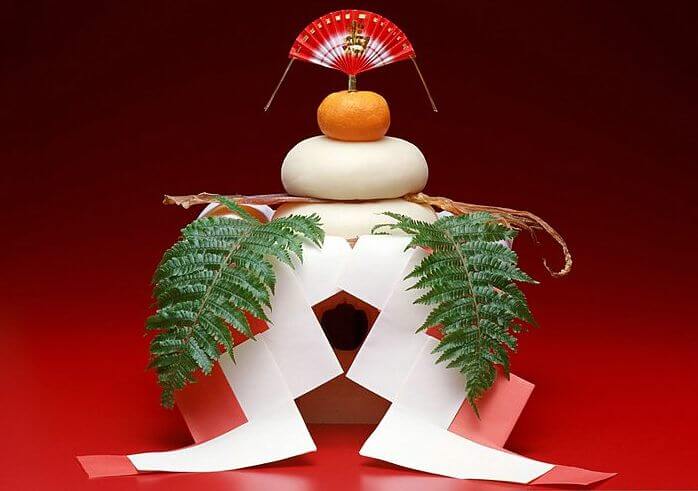
Would you explain the Japanese tradition of the tangerine with leaf atop the kagami mochi, specifically why we seek out tangerines with leaf.
Hi Karen,
Each item included in Kagami mochi has a special meaning that is associated with family and long life. The tangeline-like fruit placed at the top is a bitter orange, which is called ‘daidai’ (橙) in Japanese. Fruit of daidai stays on branch for 4-5 years without dropping onto the ground. So it is placed at the top to pray for continuation of the family and prosperity for many generations. The reason for keeping a leaf on daidai is to imply that the fruit is still on the tree and not dropped.