My Matcha Roll Cake is a matcha-flavoured fluffy Swiss roll filled with a swirl of fresh cream. The contrast between green and white is striking, and the combination of fluffy sponge cake (almost like a chiffon cake!) and its elegant sweetness is characteristic of Japanese cakes.
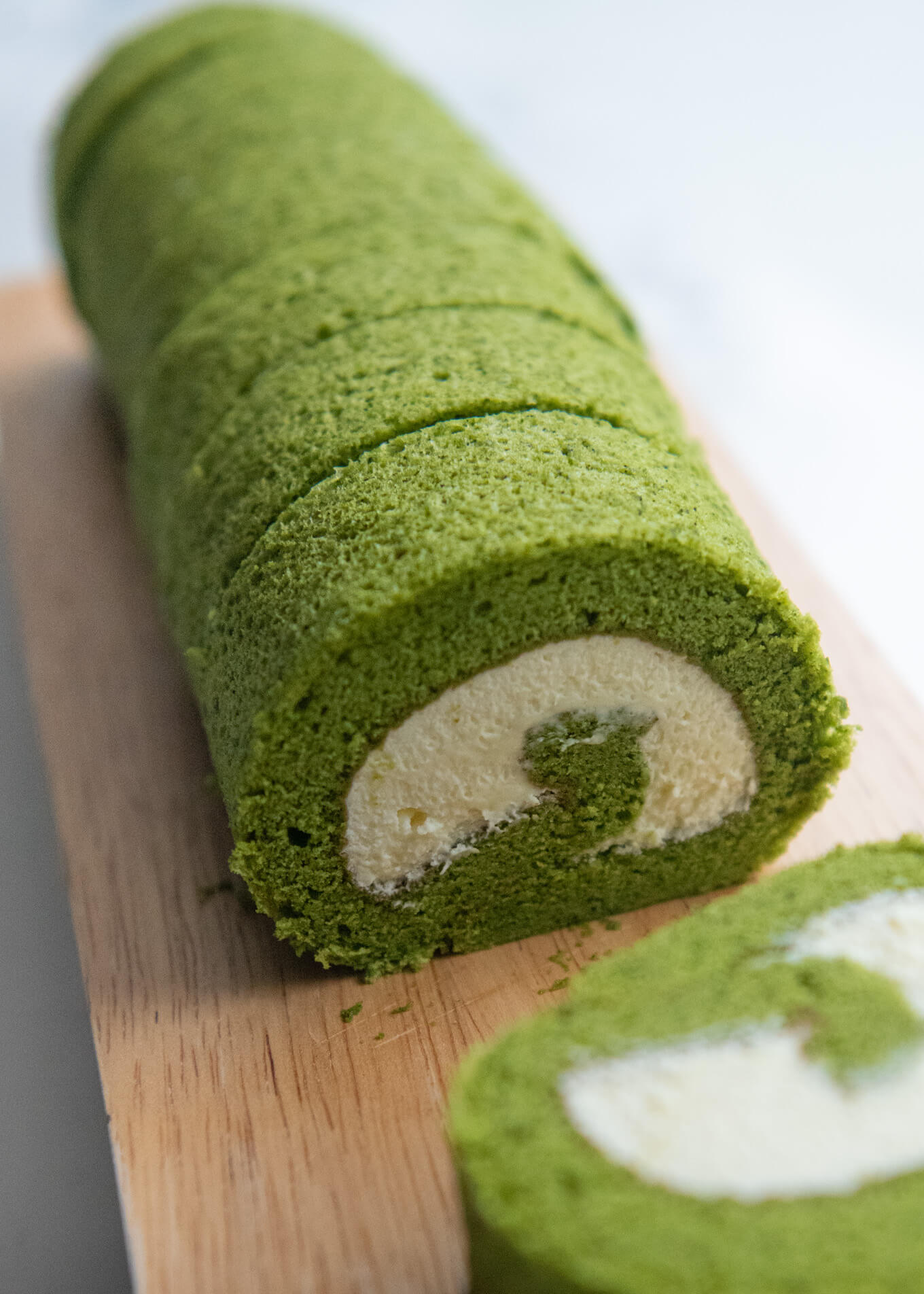
Although I don’t usually eat dessert after meals or cakes for tea, I don’t mind this Matcha Roll Cake because it is not too sweet. Rolling a sheet of sponge filled with whipped cream requires a bit of care, but when you slice it, you will be rewarded with a beautifully presented cake.
Today’s cake is made by baking a square (or rectangular) sheet of sponge cake, then rolling it with a filling inside. Some roll cakes have many layers of swirl, while others overlap only slightly between the beginning and the end of the roll.
Depending on how much filling you put in, the thickness of the sponge, and the length of the cake, the swirl layer can vary significantly.
My Matcha Roll Cake doesn’t have many layers of swirl. It overlaps by only about ⅓, because I use a generous amount of filling and the sponge is fluffy rather than thin.
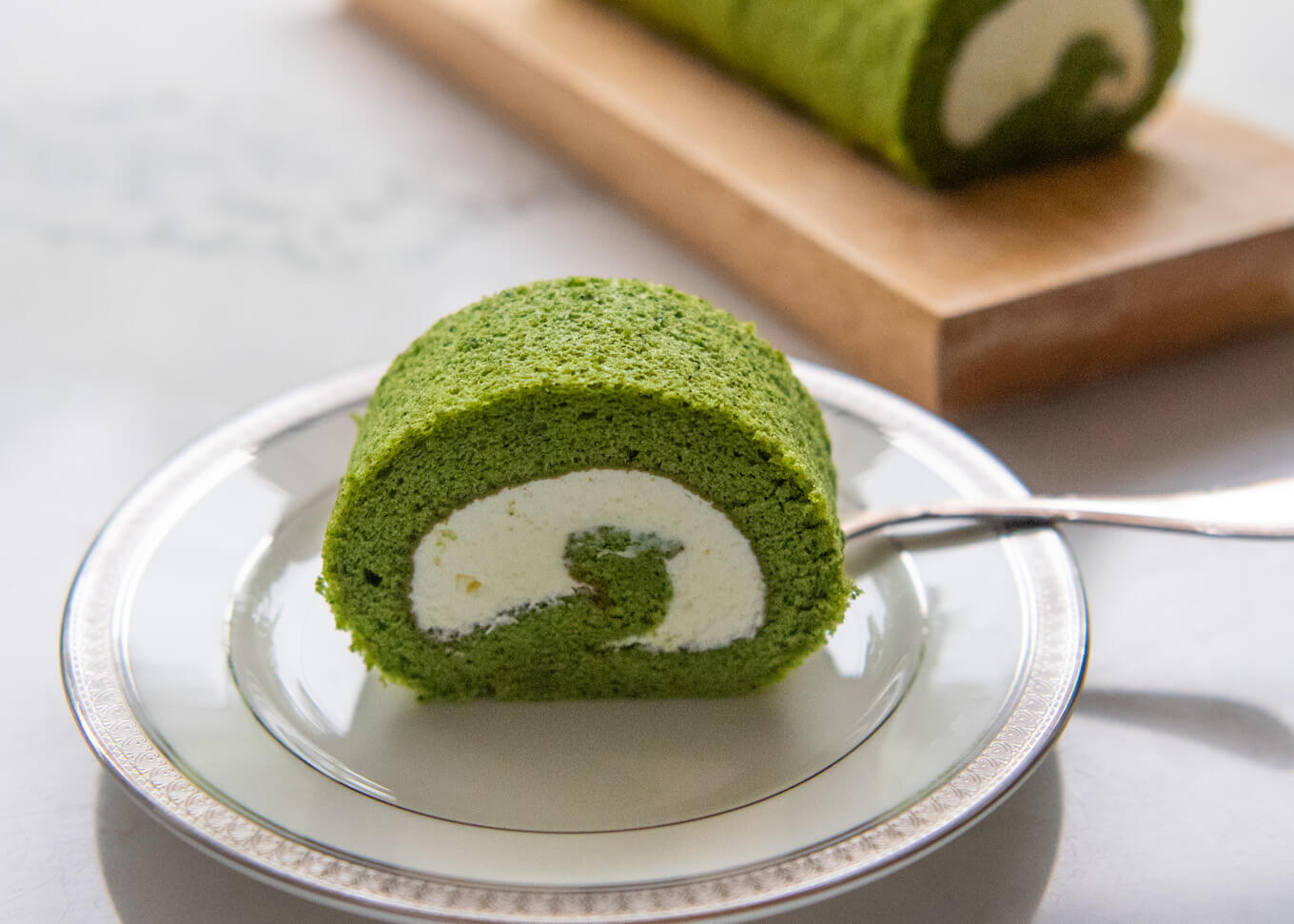
The filling of my Matcha Roll Cake is mildly sweetened whipped cream. Combined with the slight bitterness of matcha sponge, it creates a refined well-balanced sweetness.
It’s not as difficult as it looks!
Today’s recipe is quite long and full of instructions and notes. This is because there are a few tricks to making a successful roll cake, so I’ve included detailed guidance. In a nutshell, a roll cake is made by baking a thin sheet of sponge, spreading filling over it, and rolling it up.
common problem
The most common problem when making a roll cake is that the sponge cracks while rolling. The main causes of a sponge cake cracking during rolling are twofold. The sections below explain the possible causes of cracking and how to prevent them.
1. The sponge cake is too dry to roll
Use ingredients that help keep the cake moist – As you can see in the ingredients list, I added a small amount of corn flour/cornstarch along with the all-purpose flour. I also added oil to the wet ingredients.
Avoid overbaking – The method of making batter is almost the same as for my Japanese Strawberry Sponge Cake, but baking time is shorter and the temperature is slightly lower.
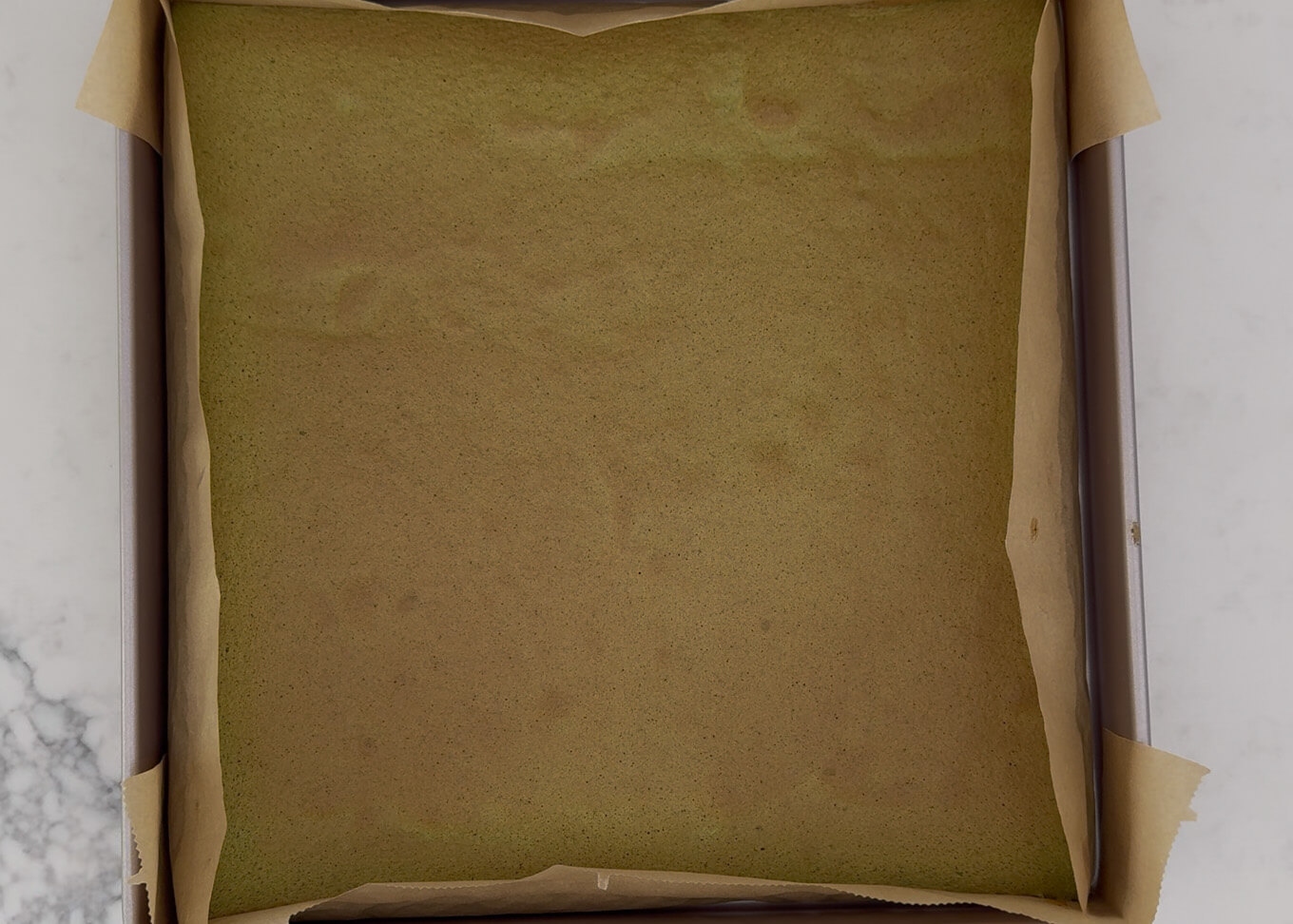
I baked the cake at 170°C/338°F (fan forced) for 16 minutes. This seems to be the best combination of the temperature and the baking time – it cooks through while retaining moisture and the surface does not become too dark.
Cover to cool and roll as soon as it has cooled – Because the surface area is larger than that of tall round cakes, moisture evaporates more quickly. As soon as the sponge reaches room temperature, you should roll it.
Prolonged cooling dries out the cake, which can cause the cake to crack when rolled.
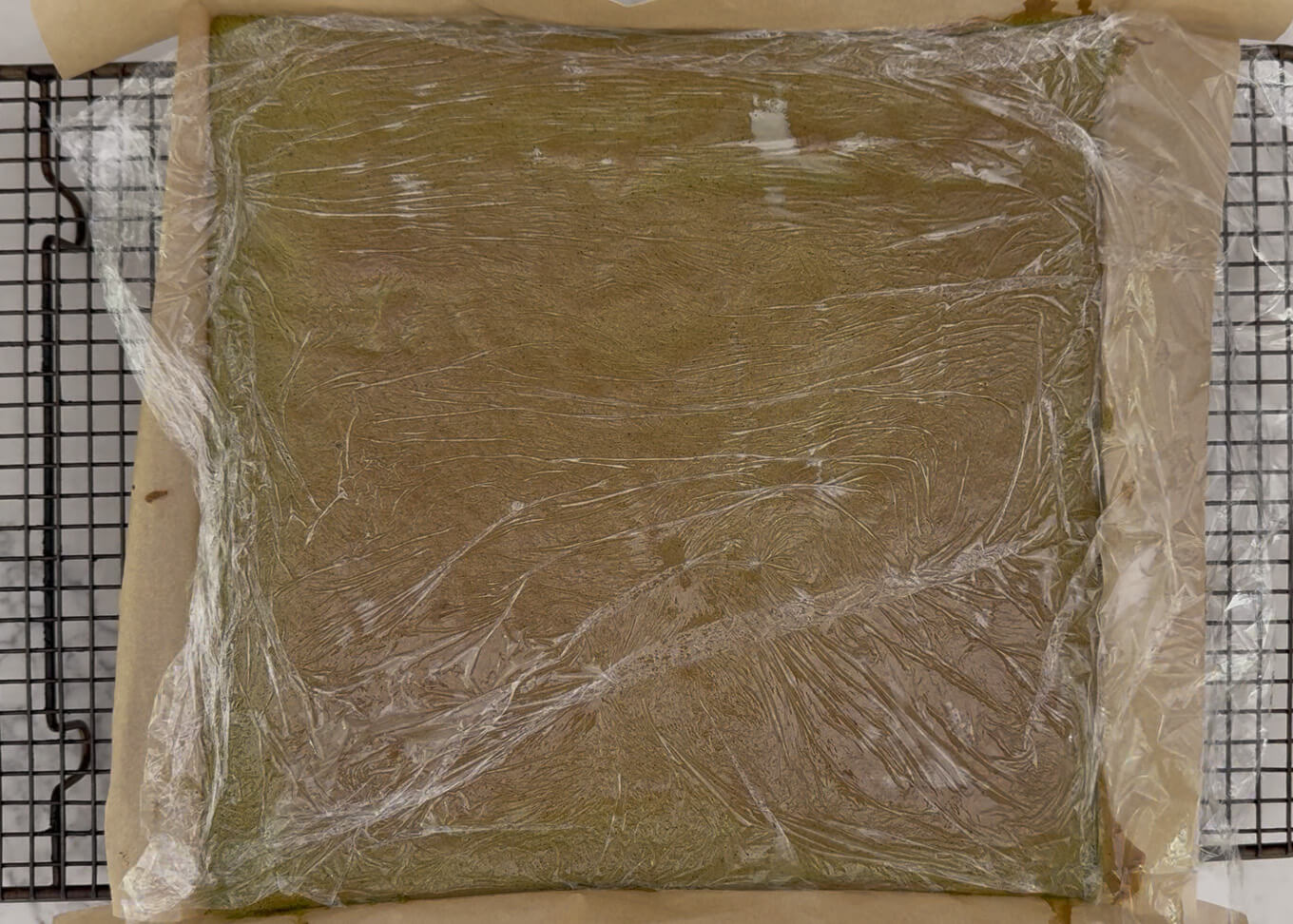
Cover the surface while cooling.
A slightly warm cake is more moist and easier to roll, but the cream may melt.
2. Too much force is applied when rolling the sponge cake.
Use baking paper to roll the cake (see the video) – Place the sponge on a sheet of baking paper to help guide the rolling. Since baking paper is slippery, use a damp kitchen paper/towel or a silicone baking mat underneath it to prevent slipping. Trust me – you will notice a big difference.
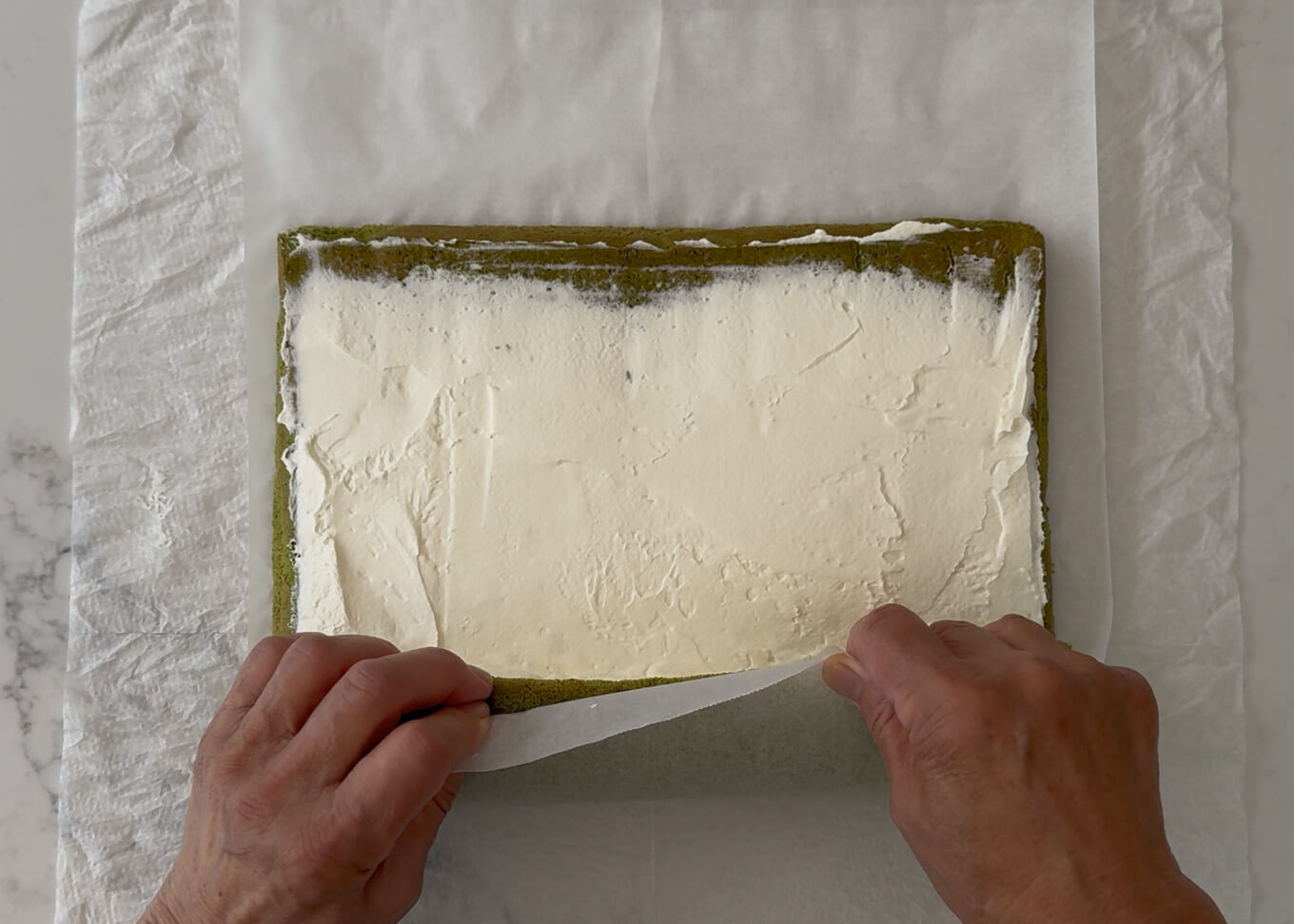
Screenshot
Pull the baking paper to assist the roll (see the video) – After forming the core at the edge of the cake, lift the baking paper and gently pull it forward to help the cake roll naturally.
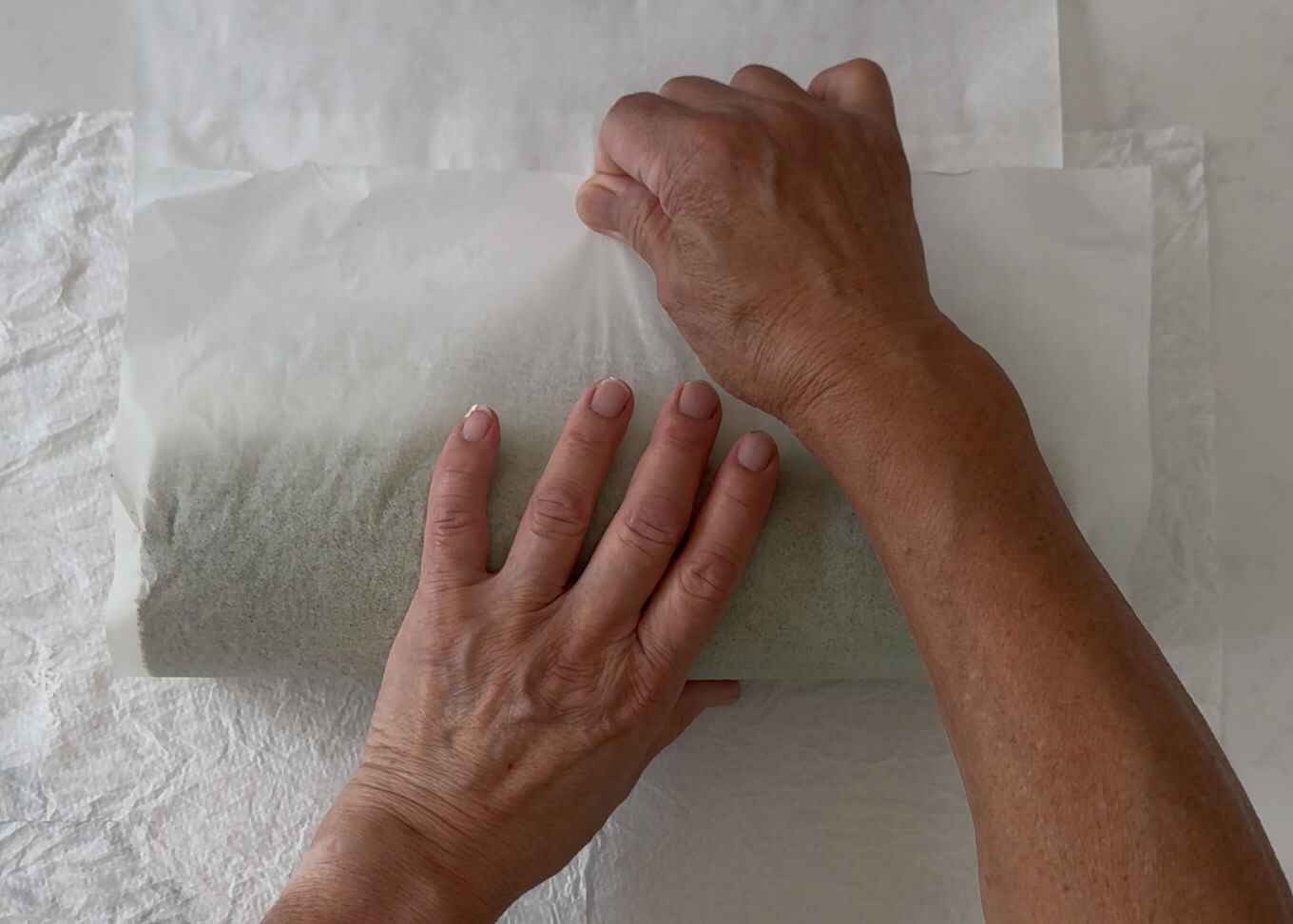
Screenshot
Serving the Matcha Roll Cake is the Fun part of this recipe!
Once you have rolled the cake, you must chill it in the fridge for at least 3 hours. Overnight is OK too.
- Freshly made roll cake is fragile and easily loses its shape. Chilling allows the sponge and cream to set together and form a stable roll.
- Resting the cake in the fridge lets the moisture distribute evenly throughout the sponge cake, resulting in the soft and moist texture.
- Cream firms up by chilling the cake, which makes it easier to cut the cake cleanly.
What’s in my Matcha Roll Cake (Swiss Roll)
In this recipe, I used a method of beating egg yolks and egg white separately. The eggs I used were Australian large eggs, which weighed about 55g / 1.9oz each on average.
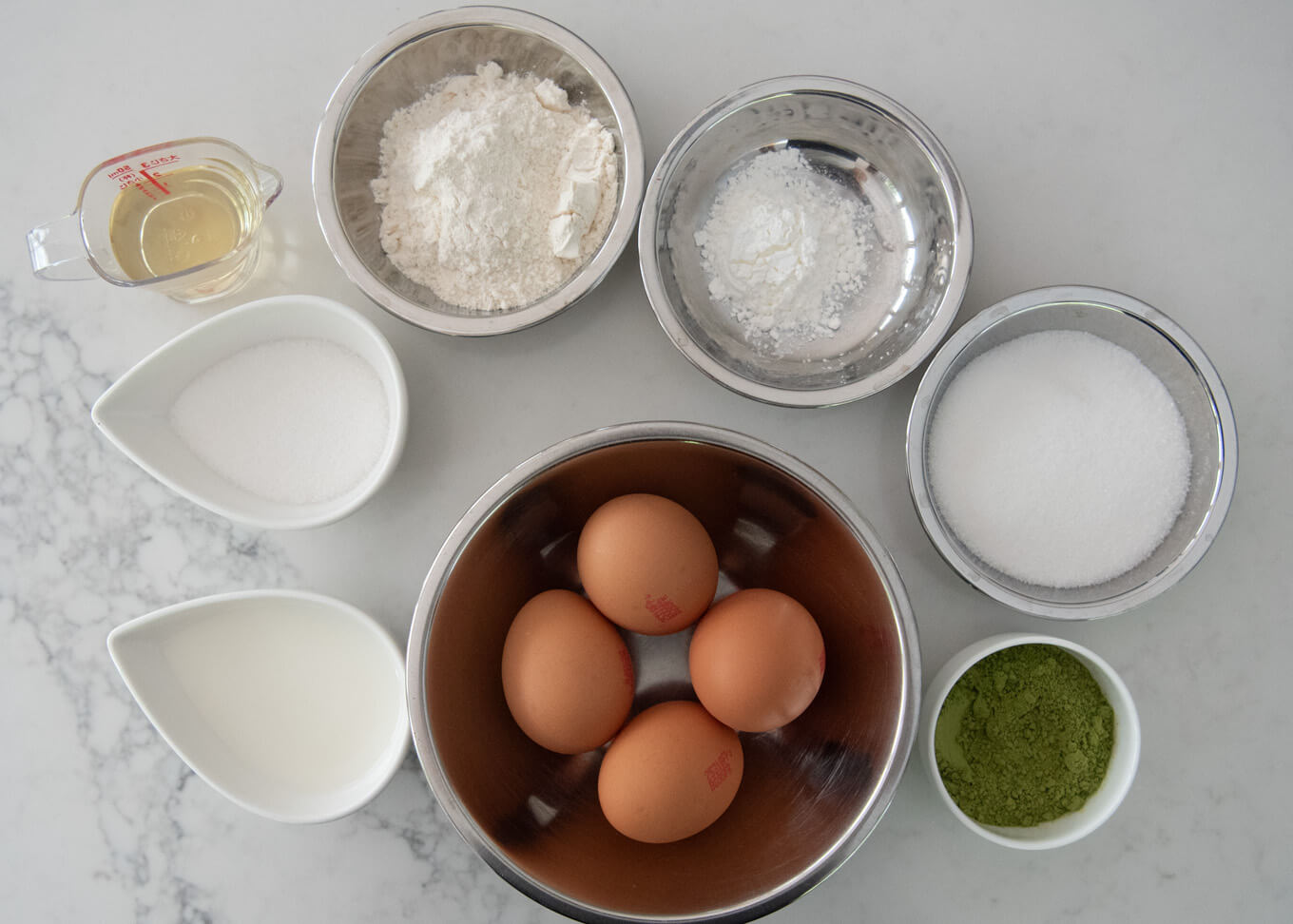
Wet Ingredients
- Egg yolks
- Sugar
- Grapeseed oil, or other neutral-flavoured oil such as Taihaku sesame oil, or rice bran oil
- Milk.
Dry Ingredients
- Plain flour
- Corn flour / cornstarch
- Matcha powder.
As mentioned in my post Easy Matcha Pudding, the colour of matcha powder varies depending on the brand and quality. I used ceremonial-grade matcha (used for tea ceremonies) because it has the best matcha flavour and a vivid green colour.
Meringue
- Egg white
- Sugar.
Filling
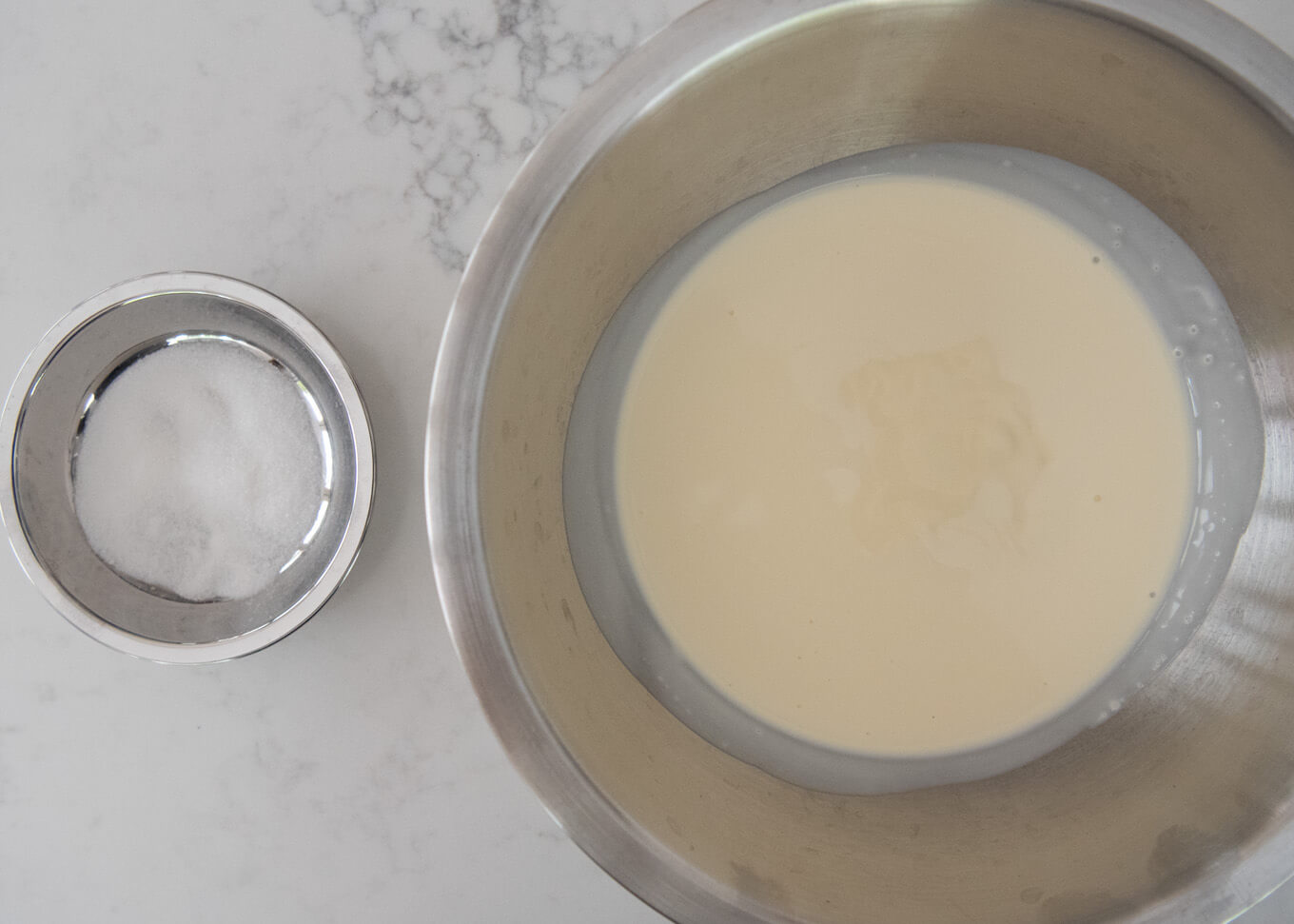
- Thickened cream
- Caster sugar.
About The Baking Pan
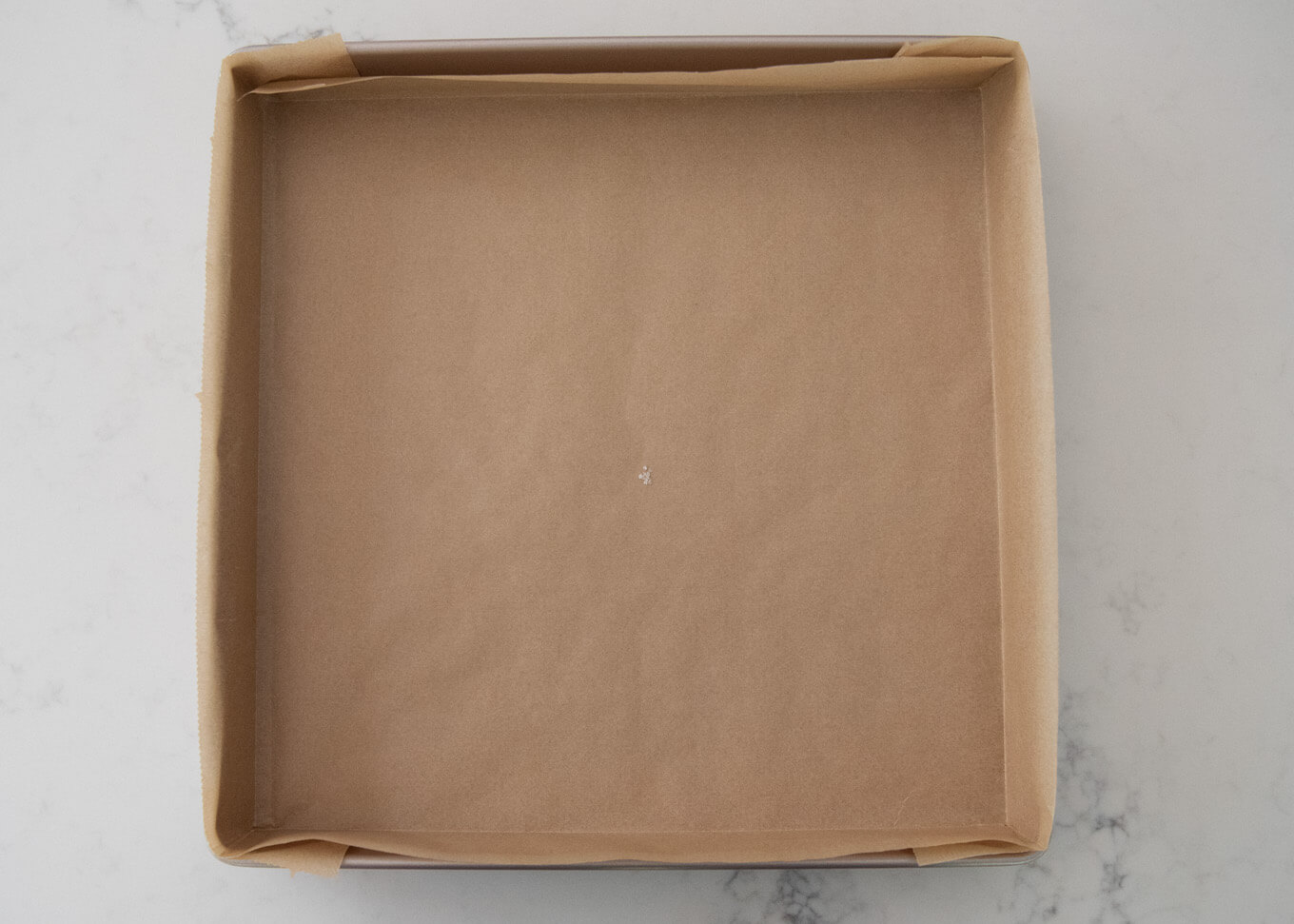
You need a sheet of thin sponge cake to make a roll cake. I used a 28cm / 11″ square cake pan (sold as a roll cake pan), lined with baking paper. I think it is the ideal size for today’s recipe. Any larger pans will make a roll too long to handle. To roll the cake, you will need a sheet of baking paper that is about 30cm / 12″ wide, which is perfect for a 28cm / 11″ cake.
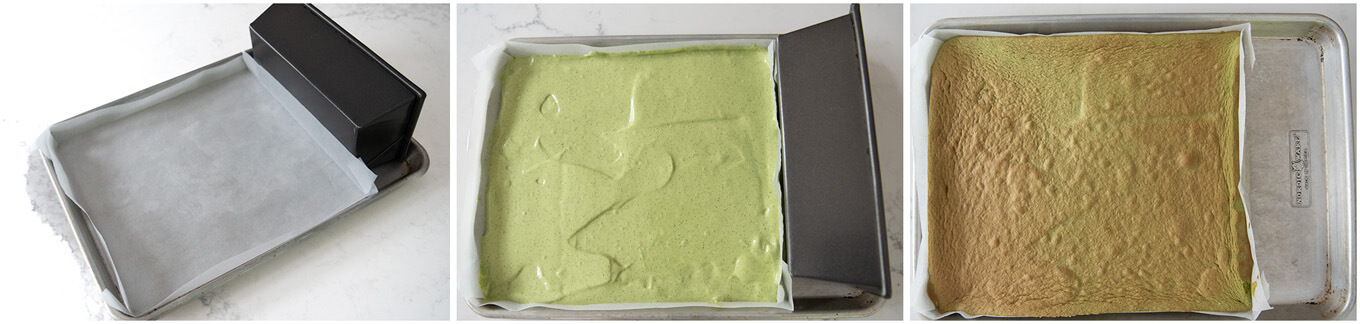
If you don’t have a square pan, you can use a rectangular baking tray with a narrow side of around 25-28cm / 10-11″. You will need to create a square lining to fit the shorter side. To support the baking paper without a rim, place a small tin (such as a loaf pan) or a small oven-safe ceramic dish next to the paper.
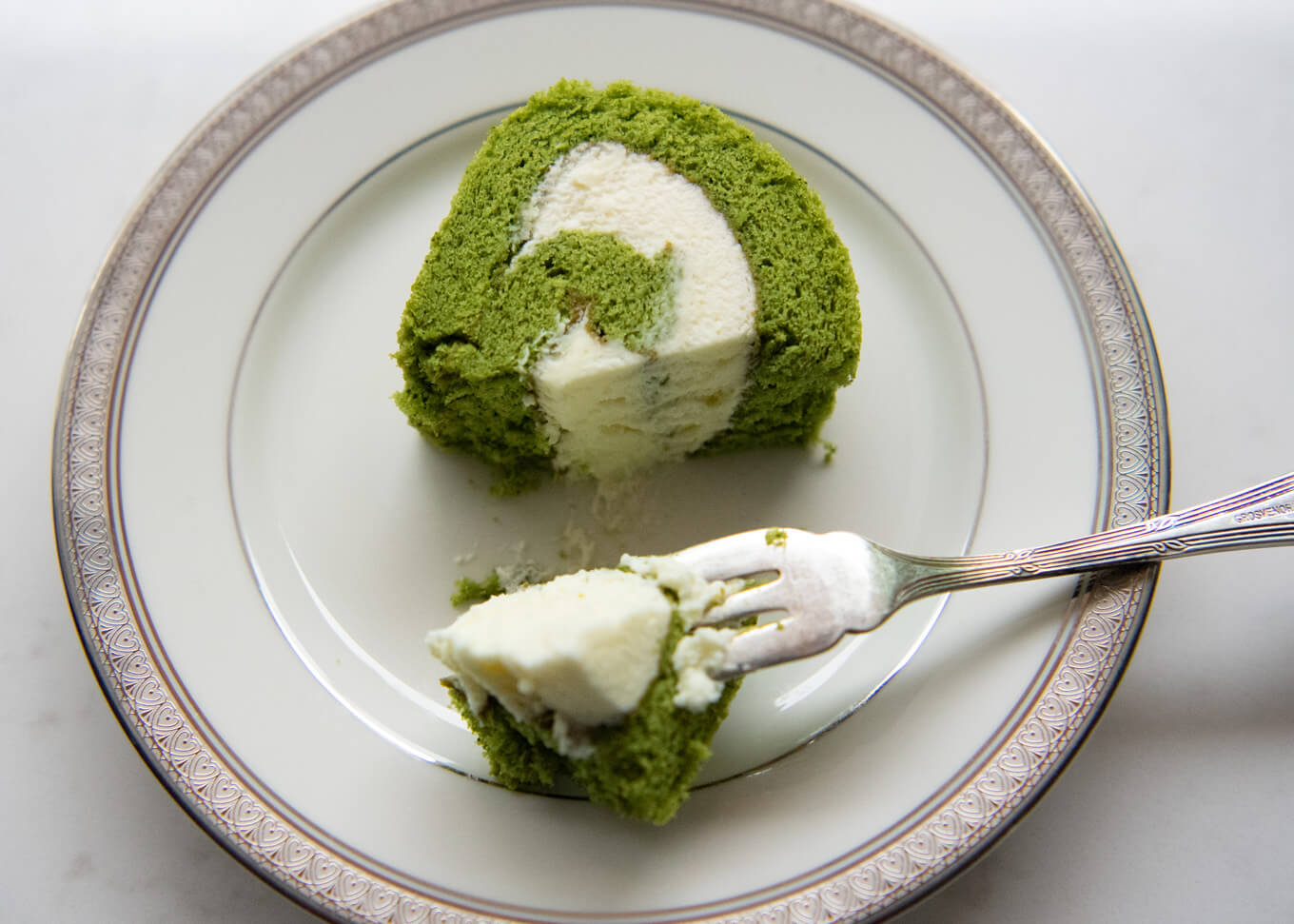
Matcha Roll Cake is a delightful eye-catching cake. I asked many people to taste test it and received very positive feedback. Consistent highlights were:
- Appearance
- Light and fluffy sponge cake
- Reduced sweetness.
Yumiko
Watch How To Make It
My Matcha Roll Cake is a matcha-flavoured fluffy Swiss roll with a swirl of fresh cream. The colour contrast of green and white is impressive, and the soft sponge with its elegant sweetness is characteristic of Japanese cakes.
See the video.
- 4 egg yolks (note 1)
- 35g / 1.2oz (2⅓ tbsp) sugar
- 30g / 1.1oz (2⅓ tbsp) grapeseed oil (note 2)
- 55ml (3⅔ tbsp) milk
- 50g / 1.8oz (5 tbsp) plain flour
- 10g / 0.4oz (1 tbsp) corn flour/cornstarch
- 10g / 0.4oz (2 tbsp) matcha powder (note 3)
- 4 egg whites (note 1)
- 70g / 2.5 oz (4⅔ tbsp) sugar
- 250ml (1 cup) thickened cream
- 20-25g / 0.7-0.9oz (1⅓ - 1⅔ tbsp) caster sugar (8-10% of the weight of the cream)
-
Line a 28cm x 28cm / 11” x 11” baking tray with baking paper on the bottom and the sides (note 4).
-
Mix all the Dry Ingredients well, but gently, in a small bowl. Matcha powder is so light that it will scatter everywhere if you mix it vigorously.
-
Place the egg yolks in a medium bowl and mix. Add sugar and beat at high speed until the mixture becomes pale cream in colour and thickens. Draw an infinity symbol on the surface of the batter with the beater. If the pattern stays momentarily, it is ready.
-
Add ¼ of the oil at a time to the yolk mixture, beating at high speed each time to ensure that the oil is fully incorporated.
-
Reduce the speed of the beater to slow, then add milk in 4-5 batches, beating well each time after adding the milk.
-
Sieve the Dry Ingredients mixture and add it to the egg yolk.
-
Using a whisk, gently incorporate the flour mixture into the egg yolk mixture. Start from the centre of the bowl in a circular motion, gradually widening the circle. This helps prevent lumps from forming.
-
When the batter is mixed well, set it aside.
-
Turn the oven on and preheat it to 170°C / 338°F (fan forced), with the rack in the middle position.
-
Beat the egg whites in a large bowl. When bubbles form and the mixture becomes whitish, add ⅓ of the sugar and beat for 10-15 seconds. Repeat twice adding another ⅓ of the sugar each time, beating after each addition of sugar.
-
Continue to beat until the meringue forms medium peaks (when you lift the beater/whisk, the peak will form but curl slightly at the tip, see the video).
-
Using the whisk, mix the batter slightly, then transfer about ⅓ of the meringue to the bowl with the batter.
-
Fold the batter and meringue mixture gently using the whisk. Then transfer the batter to the bowl with the remaining meringue (use a spatula to scrape all the batter out of the bowl). It’s ok if a small amount of meringue is not fully incorporated in the batter at this stage.
-
Fold the mixture using the whisk until mostly combined. Then switch to a spatula and continue folding until there is no trace of white meringue. Do not overmix, as it will break the small air bubbles, resulting in a flat, dense sponge cake.
-
Transfer the batter to the baking tray lined with baking paper. Using a scraper, spread the batter, leveling the thickness. Ensure that each corner of the tray is filled with the batter (note 5).
-
Drop the tray from about a 10cm / 4” height a couple of times to remove air pockets in the batter.
-
Place the tray in the oven on the middle shelf and cook for 16 minutes.
-
Remove the tray from the oven and transfer the cake, including the baking paper to a cooling rack.
-
Quickly cover the surface with cling wrap (to retain moisture), then turn the cake upside down so that the baking paper is on top. Make sure the entire surface of the cake is covered. Let it cool to room temperature.
-
Combine the Filling ingredients in a medium bowl and beat with an electric beater or whisk.
-
Beat the cream until it becomes slightly stiffer than the usual whipped cream used for cake decoration (note 6).
-
Lightly wet 4 sheets of kitchen paper and place them on the workbench, forming a large square (or use other material as per note 7). This will stop the baking paper from slipping when rolling the cake.
-
Gently remove the baking paper from the cake.
-
Cut a new piece of baking paper twice the length of the sponge cake and place it over the cake. Align the edge of the paper to the side of the cake farthest from you, allowing the paper to extend 2-3cm / ¾-1⅛" beyond the cake.
-
Slide the cake, with the cling wrap and baking paper intact, off the rack and move it to the work bench.
-
Pick up the far edge of the cake together with the baking paper and cling wrap. Turn the cake upside down by bringing the lifting edge towards you. The cling wrap should now be on top.
-
Gently remove the cling wrap (it’s ok if part of the brown surface comes off), then transfer the baking paper with the cake onto the wet kitchen paper. The edge of the cake closest to you should sit 2-3cm / ¾-1⅛" inside of the edge of the baking paper (note 8).
-
Put all the whipped cream in the middle of the cake. Using an icing spatula, spread the cream, ensuring the thickness of the cream is even (note 9).
-
Wipe off about 2cm / ¾" of the cream along the edge farthest from you and reserve the removed cream.
-
Draw a line with the icing spatula about 1cm / ⅜" from the edge closest to you, lightly cutting into the sponge. This will allow you to easily fold the edge of the sponge and form the core of the roll cake.
-
Lift the paper closest to you and gently fold the edge of the cake along the line you just drew. If necessary, use your fingers to fold the cake firmly to create the starting point of the roll.
-
When the edge of the cake reaches the top, pull the paper forward, which will roll the cake. You may need to place your fingers on top of the cake initially when you start rolling. The paper should be held parallel to the workbench all the way until the end of the roll.
-
When the rolled cake reaches the end and the seam is at the bottom, unroll the paper and fill both sides of the roll with the leftover cream so that the cream will be filled to the edge without a gap.
-
Put back the paper over the rolled cake again and ensure the seam is at the bottom.
-
Place a long ruler (or something similar) on top of the paper that the roll cake is wrapped in, so that the top part of the baking paper meets the bottom part. Then pull the paper that is sticking out from underneath the roll cake while pushing the ruler inward. This tightens the entire roll, resulting in a neatly shaped, round roll cake.
-
Leaving the paper tucked in by the ruler, continue rolling the cake with the paper until the seem is at the bottom.
-
Cover both edges of the roll cake with cling wrap to prevent it from drying out, then chill it in the fridge for at least 3 hours. Overnight is also OK.
-
Unwrap the paper. Cut about 1cm / ⅜" off both ends of the roll (note 10).
-
Clean the knife using a damp towel or kitchen paper after each cut.
-
Cut the roll cake into 8 slices and serve.
1. I used large eggs, which weighed 55g / 1.9oz on average. In Australia, a carton of large eggs (a dozen) weighs a minimum of 600g / 1.3lb.
My egg yolk was 72g / 2.5oz and the egg whites 158g / 5.6oz. It doesn’t matter even if the weight of the yolk and whites is not the same as mine, as long as the average weight of the eggs is close to 55g/ 1.9oz.
2. Any oil with a neutral flavour is fine. Other oils you can use include Taihaku sesame oil and rice bran oil.
3. If you can, use ceremonial-grade matcha (used for tea ceremonies) because it has the best matcha flavour and a vivid green colour.
4. I find that the size of the sponge cake baked in this size tin is the easiest to make a roll cake. If you don’t have one, you can use a rectangular baking tray whose shorter side is 25cm-28cm / 10-11″. Note 11 explains how to make a square sponge cake using a rectangular baking tray.
5. Use the edge of the scraper to push the batter into each corner of the tray first, then along the sides, before levelling the entire surface.
6. Whipped cream prepared for cake decorations is too soft to use inside a roll cake because the cream can ooze out when rolling the sponge. You need to whip the cream a little longer so that it becomes firmer, but not so much that it becomes a butter-like texture.
7. If you have a large silicone baking mat, that would be ideal (but I don’t have one). You can also use a lightly wet kitchen towel on the workbench.
8. It is important to place the cake 2-3cm / ¾-1⅛" from the edge of the baking paper. This makes it easier to start rolling the cake.
9. I spread the whipped cream from the centre to each corner of the cake, then to the sides to cover the entire surface before levelling the thickness of the cream. You can of course use your own method, as long as the cream has a consistent thickness.
10. There is nothing wrong with the ends of the roll cake, except that the sponge tends to be drier (being the edge) and the surface uneven. If you are serving the roll cake at home with your family, it is quite alright not to trim both ends.
11. You will need a rectangular baking tray and a loaf pan (or something similar that can go in the oven). The width or the height of the loaf pan should be similar to the difference between the short side and the long side of the tray.
Measure the length of the short side of the tray and make a square lining (bottom and sides), imagining that the tray is a square. The height of the side made with the baking paper should be 3-4cm / 1⅛-1 9⁄16 "
Place the lining inside the tray, shifting it to one side. Then place the loaf tin next to the edge of the baking paper so that it acts as a wall supporting the paper. Bake the cake with the loaf tin in place. (Please see the photos in the post)
Leave a Reply